
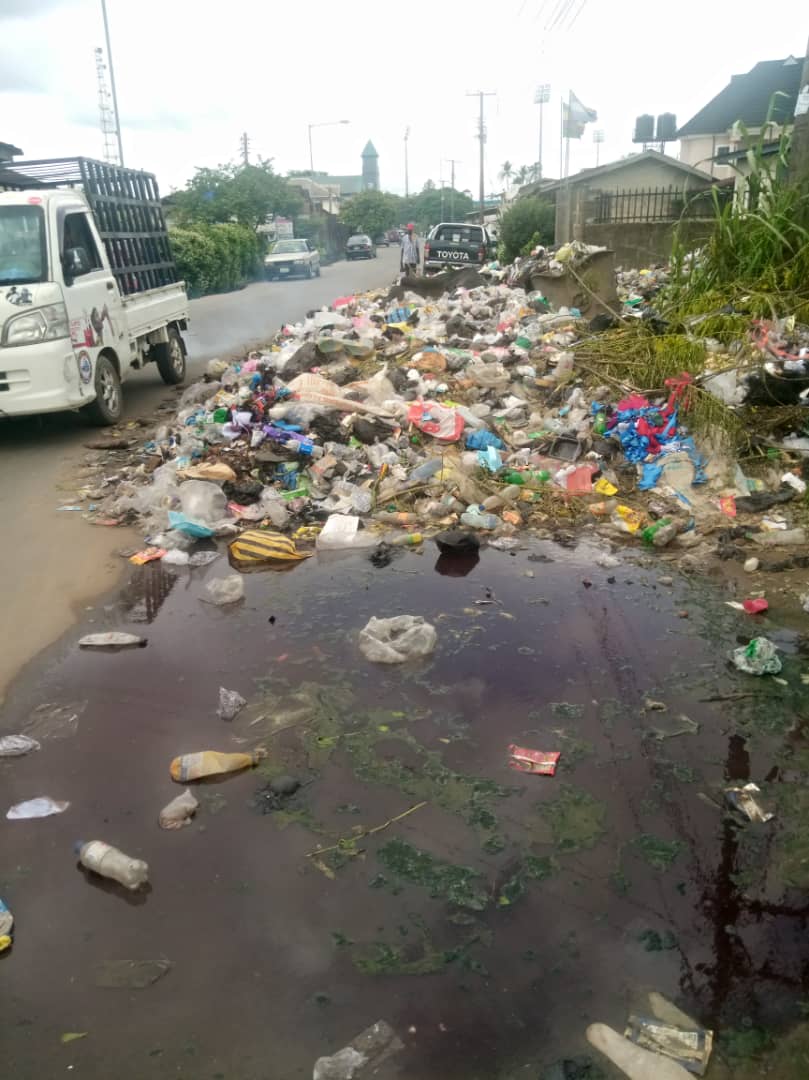
Rain falls on a mass of waste. Moisture already contained in the waste mixes with liquids released as organic materials decompose. The resulting liquid moves through the waste and can pick up dissolved and suspended contaminants along the way.
That contaminated liquid is commonly called leachate.
Why leachate is not simply “dirty water”
Landfill leachate can be chemically complex. Its composition varies with the age and composition of the waste, rainfall, climate, landfill conditions and other factors. Recent scientific reviews describe leachate as highly variable and potentially containing organic and inorganic pollutants, ammonia, metals, microorganisms and emerging contaminants. The exact composition depends strongly on the waste and site conditions.
This variability is why appearance alone cannot establish what a liquid contains. Dark liquid beside waste may raise concern, but proper environmental assessment and, where necessary, laboratory testing are needed to determine composition and risk.
A Calabar experience
P4SEDI's archival environmental observations include a 2022 neighbourhood waste collection point in Calabar where an environmental specialist familiar with the site identified the offensive liquid accumulating around the waste as leachate. Residents experienced an intense, sickening odour, and nearby food businesses were affected because customers found the immediate environment unpleasant.
This local experience illustrates something that is easy to miss when leachate is discussed only in scientific language: poorly managed waste can affect neighbourhood liveability and local livelihoods long before a pollution problem is described in a laboratory report.
Where can it go?
If leachate is not properly contained, contaminants may move into surrounding soil, surface water or groundwater. The extent and significance of that movement depend on site conditions, geology, drainage, waste composition, rainfall and the engineering of the disposal facility.
This is one reason engineered landfills use systems intended to isolate waste, collect leachate and direct it for treatment rather than allowing uncontrolled movement into the surrounding environment.
How proper landfill systems manage it
Modern landfill management can include liners or other containment barriers, drainage layers, leachate collection pipes, storage, monitoring and treatment. Because leachate composition can vary greatly, recent reviews emphasise that treatment often requires combinations of biological, physicochemical, membrane or advanced processes rather than one universal solution.
Leachate is not the same thing as ordinary rainwater.
Not every dark liquid beside waste can be confirmed as leachate from a photograph.
Clear-looking water is not automatically safe.
What should communities know?
Avoid unnecessary contact with liquids draining from waste heaps. Children should not play in such areas. Persistent uncontrolled liquid discharge near homes, businesses or water sources deserves attention from the appropriate environmental authorities. Where contamination of a well or borehole is suspected, water-quality testing is more reliable than appearance, smell or taste.
And at the system level, prevention matters: reliable collection, controlled disposal, functional infrastructure and properly engineered treatment facilities reduce the conditions under which uncontrolled leachate becomes a community problem.