Public discussion about waste often begins and ends with government: provide bins, evacuate waste, enforce regulations. Those responsibilities matter. But there is another part of the system that belongs to everyday behaviour.
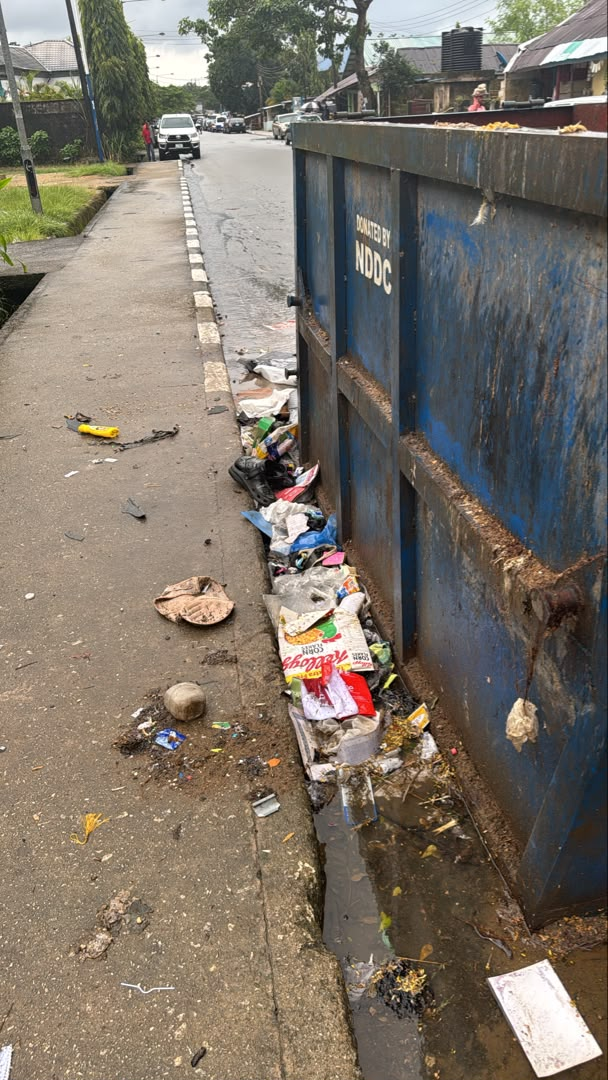
At some collection points, receptacles are present and usable while waste still appears on the ground around them. The question is therefore uncomfortable but necessary: when a disposal facility is available, why does the ground beside it become another bin?
Waste management is a chain of responsibility
Households and individuals generate and dispose of waste. Public authorities and service providers provide collection infrastructure and evacuation. Businesses and producers influence the kinds and volumes of materials entering the system. Recovery workers retrieve materials of value. Each actor affects what happens next.
That means neither of the easy explanations is sufficient. It is not credible to blame citizens for every waste problem where collection is unreliable or facilities are absent. It is equally difficult to blame infrastructure for waste deliberately placed beside an available receptacle.
The small act that becomes a city problem
A tied bag placed on the ground, a sachet dropped beside a receptacle or a takeaway pack left at the edge of a drain may appear insignificant. But loose waste can be moved by wind, rainfall, animals and human activity. It can spread from a collection point into streets and drains, turning an individual disposal decision into part of a wider environmental burden.
The World Health Organization warns that poorly managed solid waste can affect health and the environment through polluted air, water, soil and food, while uncontrolled dumping and burning remain major concerns in many places.
Accountability should point in the right direction
Where there is no disposal facility, citizens are entitled to demand one. Where evacuation is persistently unreliable, service providers and public authorities have questions to answer. Where infrastructure is broken, maintenance becomes part of the discussion.
But where a usable receptacle exists, proper disposal is an ordinary civic responsibility.
Waste & the City will continue to examine the other parts of the system separately, including damaged infrastructure, material recovery, plastics and pollution pathways.