Akamkpa Local Government Area in Cross River State has mineral resources that support construction and industry. Yet the economic value of stone extraction raises a question that continues after quarrying ends: who is responsible for the land and the communities that remain?
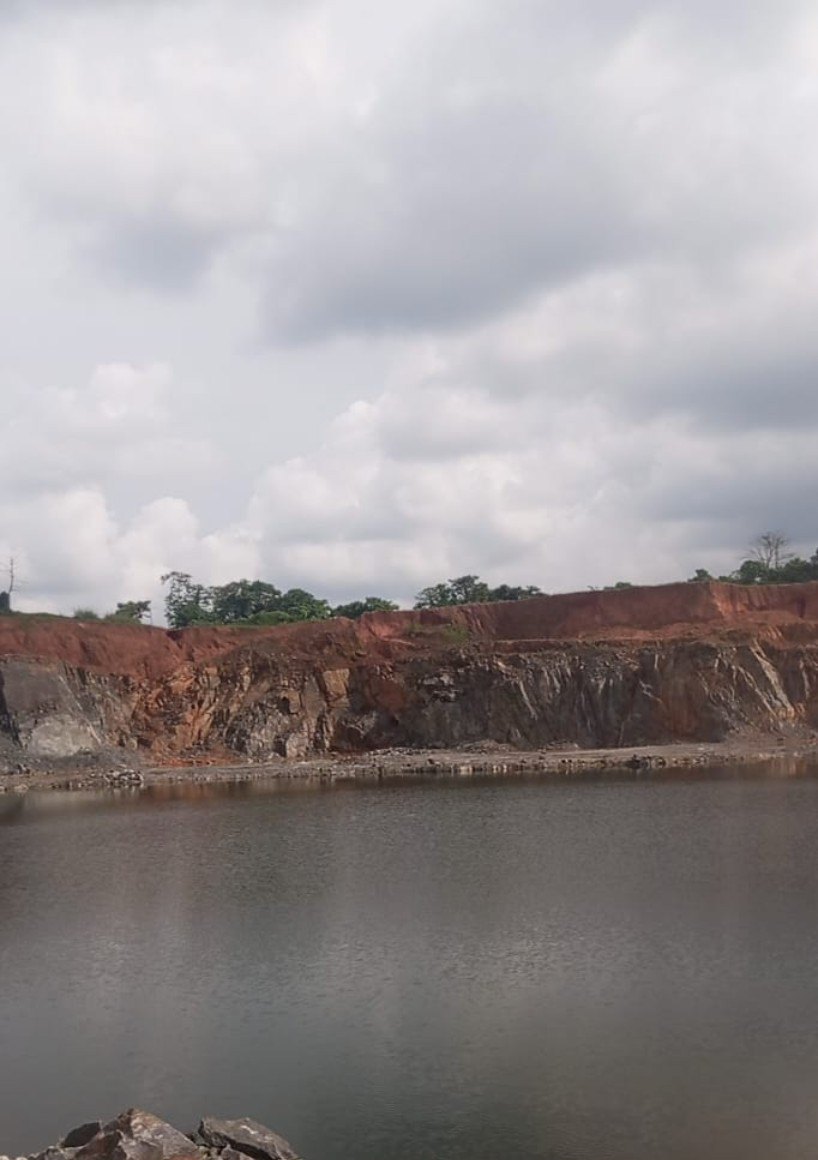
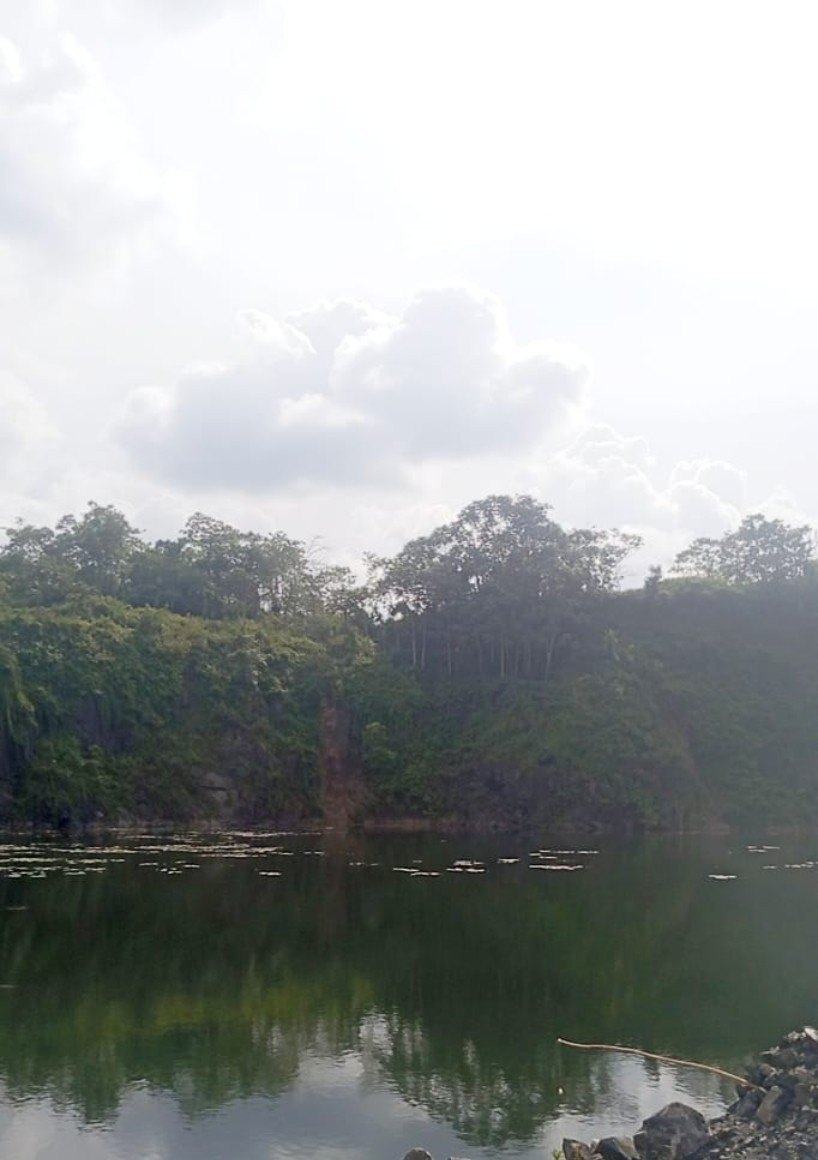
A landscape shaped by extraction
Quarrying has long been a significant activity in Akamkpa. Historical reporting recorded 36 quarries in 2014, including 26 reported as functional at that time (Calitown, 2014). The Cross River State Statistical Year Book (2024 edition) separately listed 33 quarry establishments in Akamkpa for 2023. Neither figure establishes how many sites are currently operating, suspended, closed or abandoned.
Akintoye and colleagues (2021) examined three previously quarried locations abandoned for at least a decade. At Old Netim, they reported approximately 13.5 hectares of excavated land and a pit depth of 30.2 metres. These are documented observations at selected sites, not measurements representative of every quarry in the local government area.
Environmental impacts and lingering questions
Extractive activity alters landforms, vegetation and drainage patterns. The vegetation study by Akintoye et al. (2021) found differences between abandoned sites and an undisturbed comparison area, including smaller tree stems, reduced crown cover and species indicative of early regeneration. Recovery on disturbed land may require sustained rehabilitation rather than reliance on natural regrowth alone.
Water and soil conditions also warrant monitoring. Udiba et al. (2025) examined soils around selected Awi and Njagachan quarry operations and reported contamination and ecological-risk indicators that supported recommendations for continued surveillance. Ikpi et al. (2024) assessed water resources around the wider quarry district, while Atsa et al. (2026) examined streams near Awi, Nsan and Old Netim. Their findings varied by sampling location and should not be generalised to all water bodies.
Open excavations can present safety and land-use concerns, depending on slope stability, depth, access and accumulated water. Such risks require site-level inspection before any specific conclusion is drawn.
Social and livelihood concerns
Quarrying may create jobs and economic activity, but communities have also expressed concerns about the distribution of benefits, land access, dust, noise and environmental impacts. A 2026 study by Edom recorded residents' perceptions in Mfamosing, Old Netim and Nsan. At June 2026 community engagements reported by We The People and the Nigerian Tribune, residents in limestone-mining host communities raised questions about compensation, participation, livelihoods and Community Development Agreements.
These concerns call for careful field assessment, meaningful community consultation and responses from responsible operators.
From extraction to responsibility
The Nigerian Minerals and Mining Act, 2007 contains requirements relating to community agreements, environmental assessment and rehabilitation. In particular, sections 116–121 address community engagement and environmental obligations, including rehabilitation arrangements and the Environmental Protection and Rehabilitation Fund. Relevant authorities are responsible for reviewing compliance and determining liabilities under the applicable framework.
For older sites, responsibilities can be difficult to establish without reliable records about ownership, closure plans, regulatory decisions and actual ground conditions. A transparent, verified inventory and credible environmental assessments would help determine appropriate priorities for safety, restoration and future land use.
Looking ahead
Akamkpa's mineral resources have supported regional development, but the long-term environmental responsibilities associated with extraction deserve equal attention. Evidence points to the need for independent environmental assessments, clearer documentation of rehabilitation obligations, effective regulatory oversight and meaningful participation by host communities.
Government institutions, operators and community representatives need credible information before decisions about remediation, alternative uses and accountability can be made. For P4SEDI, the issue connects environmental justice, responsible natural resource governance and community wellbeing.
Sources and further reading
- Akintoye, O. A., Essoka, P. A., Okibe, J. O., & Offiong, R. A. (2021). Effects of quarrying on vegetation characteristics in Akamkpa Local Government Area of Cross River State, Nigeria. Gombe Journal of Geography and Environmental Studies, 2(2), 178–189. Publication record.
- Atsa, J. W. U., et al. (2026). Potential health implications of heavy metal contamination of streams near quarry sites in Akamkpa, Cross River State, Nigeria. Studia Ecologiae et Bioethicae, 24(1), 115–129. DOI.
- Calitown. (2014, August 10). Akamkpa has 36 quarries. Article.
- Cross River State Bureau of Statistics. (2024). Cross River State statistical year book: 2024 edition. Report.
- Edom, O. K. (2026). Perceived impact of quarry activities on the environment and residents of Akamkpa Local Government Area, Cross River State, Nigeria. Transdisciplinary Journal of Education & Sustainable Development Studies, 1(3), 341–356. DOI.
- Federal Republic of Nigeria. (2007). Nigerian Minerals and Mining Act, 2007. Act.
- Ikpi, G. E., Nganje, T. N., Edet, A., Adamu, C. I., & Eyong, G. A. (2024). Investigation of hydrochemical characteristic, water quality and associated health risks of metals and metalloids in water resources in the vicinity of Akamkpa quarry district, southeastern, Nigeria. Geochemical Transactions, 25, 7. DOI.
- Udiba, U. U., et al. (2025). Quarry operations and soil health: Tracing metal pollution in Awi and Njagachan communities, Nigeria. Pollution Study, 6(1), 3155. DOI.
- We The People. (2026, June 9). Mining communities spotlight livelihoods, environmental justice and participation in Cross River. Report.